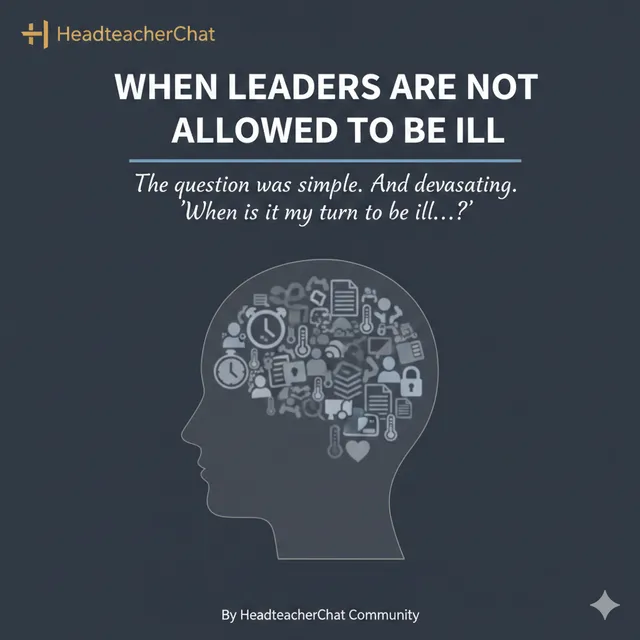
Leading a school can be isolating at the best of times. It feels harder when the people you report to seem to notice only what needs fixing. A recent discussion in the HeadteacherChat Facebook group began with a school leader describing exactly that. Their working relationship with the chair of governors and the executive headteacher had become hard to manage. Boundaries felt blurred and the dynamic was at times almost co-dependent. Thanks and acknowledgement were rare, conversations focused on what to improve or do next, and asking for support or feedback often met silence.
Anyone who has been there will recognise the slow drift towards feeling undervalued. Here is what other leaders suggested.
Ask for the support you would give your own staff
One reply suggested turning the situation around. Think about how you would support a member of staff asked to make a change: the modelling, the coaching, the clear expectations. Then ask for the same. That might mean requesting a regular conversation with an agenda, asking how a particular action was successfully delivered, or asking to shadow the executive headteacher to see how they approach it.
The same reply suggested sharing your wins and their impact in writing, so they are on the record. That is sensible advice. The suggestion also included flattering people and linking requests to your development in ways that were not genuine, and we would steer away from that part. It is hard to keep up and can damage trust. The core idea, asking for specific coaching and feedback and being clear about what you have achieved, works just as well when it is honest.
Look at what governance resources can offer
Another leader recommended the heads' wellbeing toolkit from the National Governance Association. They said it helped their chair of governors understand that more constructive feedback and praise were part of the role. Someone replied asking for a copy because they did not have a membership. The toolkit is a member resource, so it is worth asking whether your school, trust or clerk has NGA membership and can access it. If your chair is willing, working through it together could open up a conversation that is hard to start from scratch.
Talk to someone outside the situation
Several people made the same point: do not keep this to yourself. The advice was to find a coach and to talk to someone, and one leader reminded the original poster that it is a tough position that can feel very isolating.
Education Support came up as a practical starting point. Their free, confidential helpline is 08000 562 561, where a qualified counsellor can offer immediate emotional support. They also run professional supervision, with spaces that are limited and opened at regular intervals, so it is worth signing up to be told when applications open. Their website also has resources for individuals and organisations on staff wellbeing.
Be honest about whether it will change
One leader's view was blunt: if you are not supported, take your talents elsewhere. That is a big decision and not one to make in a low moment, but it is a legitimate one. A reasonable approach is to try a direct, specific conversation first. Say what you need and by when, and keep brief notes of what was agreed. If things stay the same after that, you have a clearer picture of whether the situation is likely to improve. If you are experiencing bullying or feel unsafe, your trust or school will have formal procedures, and a union or professional association can advise.
A few things you could try this week
- Ask for a regular one-to-one with a short written agenda.
- Be specific when you ask for feedback, such as "I would value your view on the attendance plan by Friday".
- Ask for roles and reporting lines to be confirmed in writing if they feel blurred.
- Keep a simple record of outcomes and the impact of your work, and include it in your reports.
- Arrange time with a coach, supervisor or trusted colleague outside your setting.
If you have been through a similar situation, we would be glad to hear what helped. Sharing it in the community may help another leader who is feeling the same.